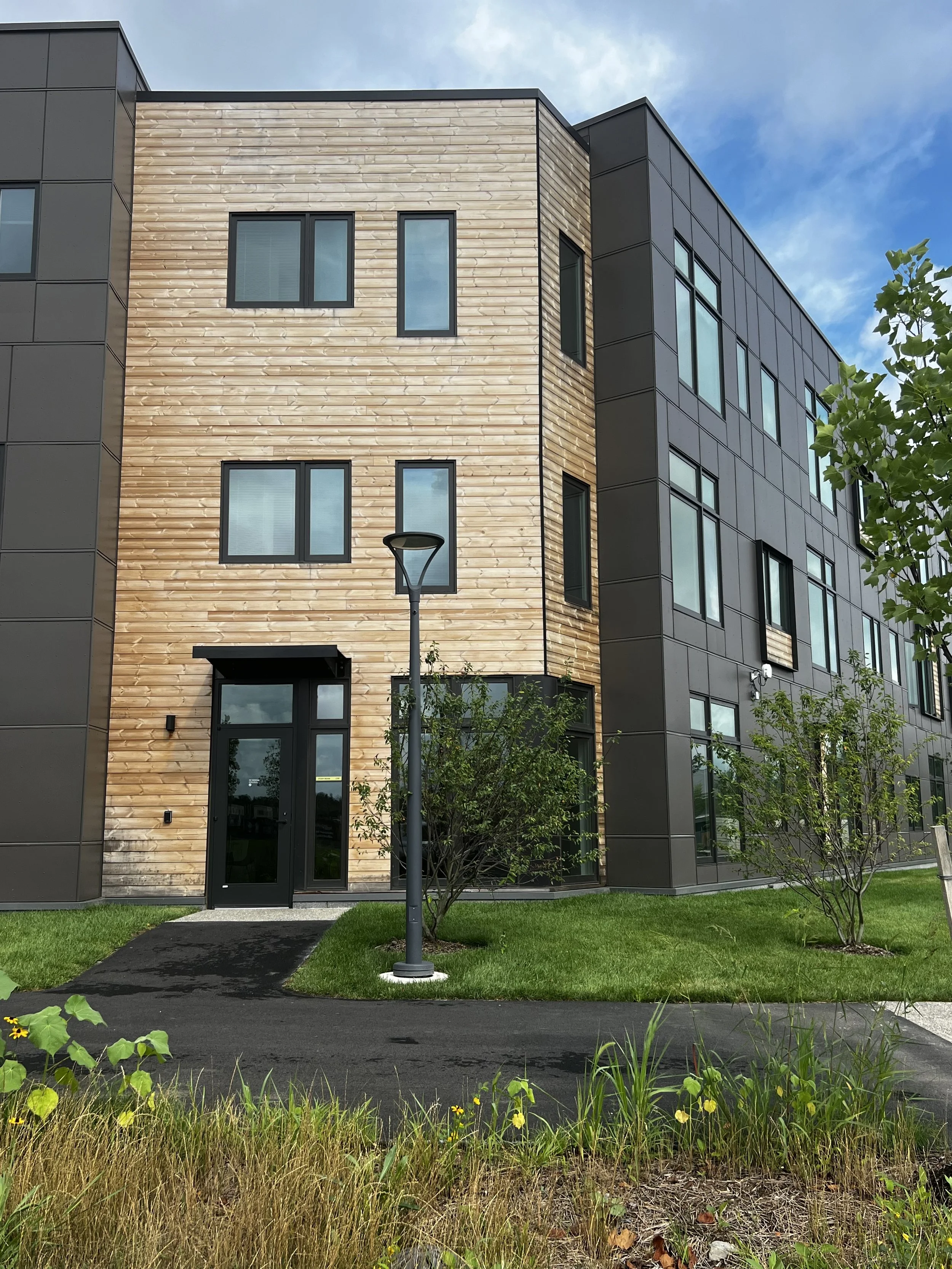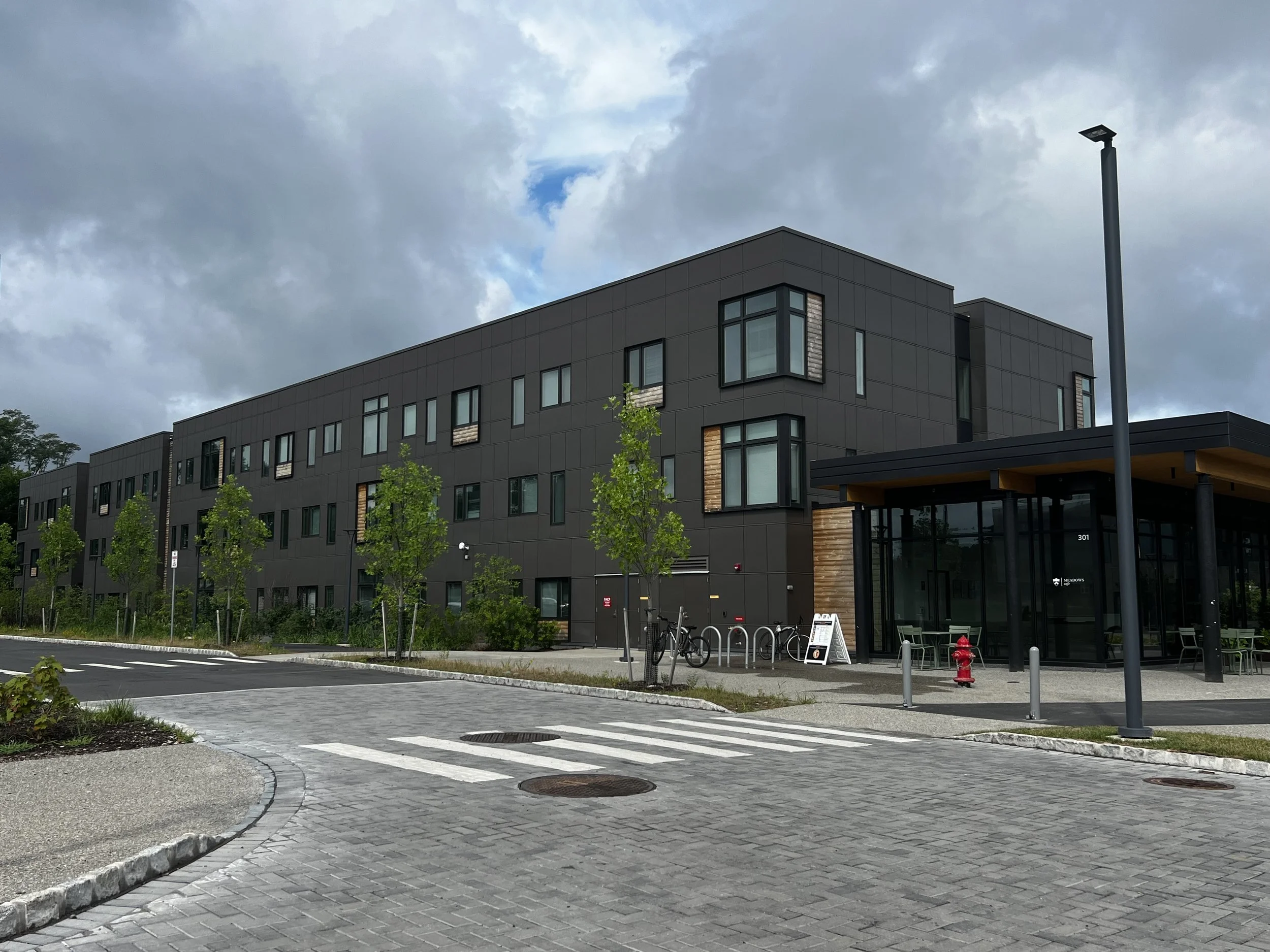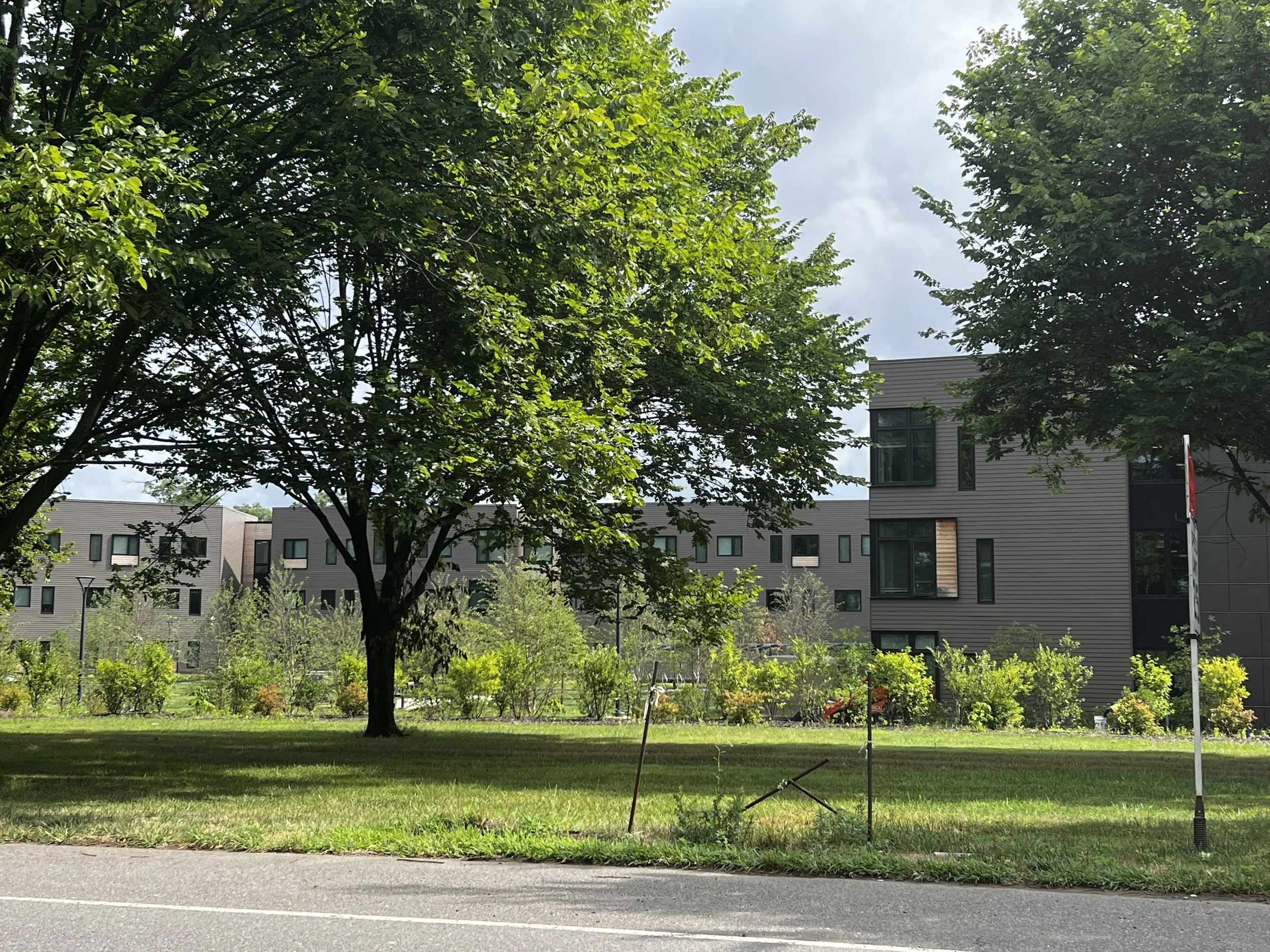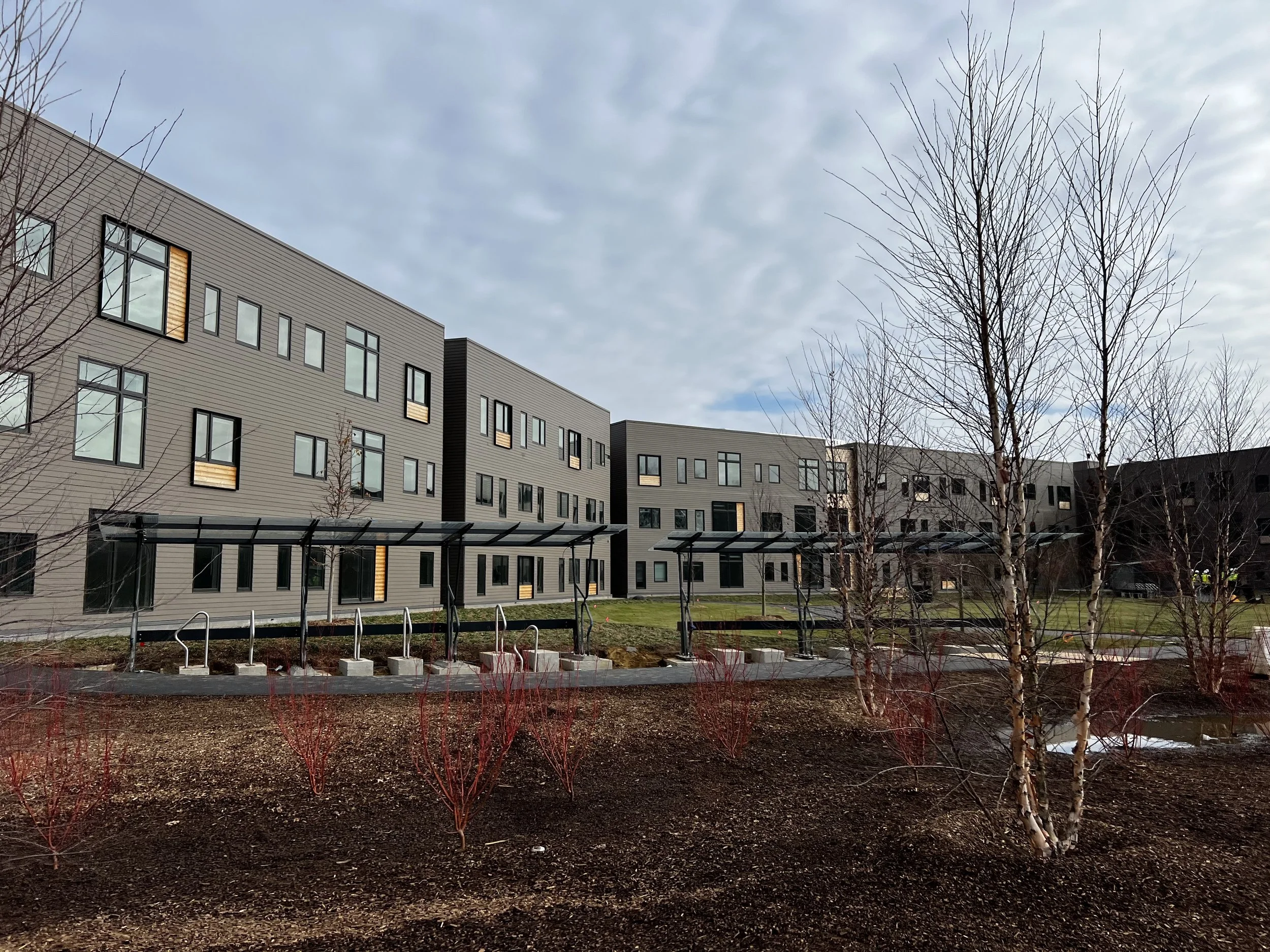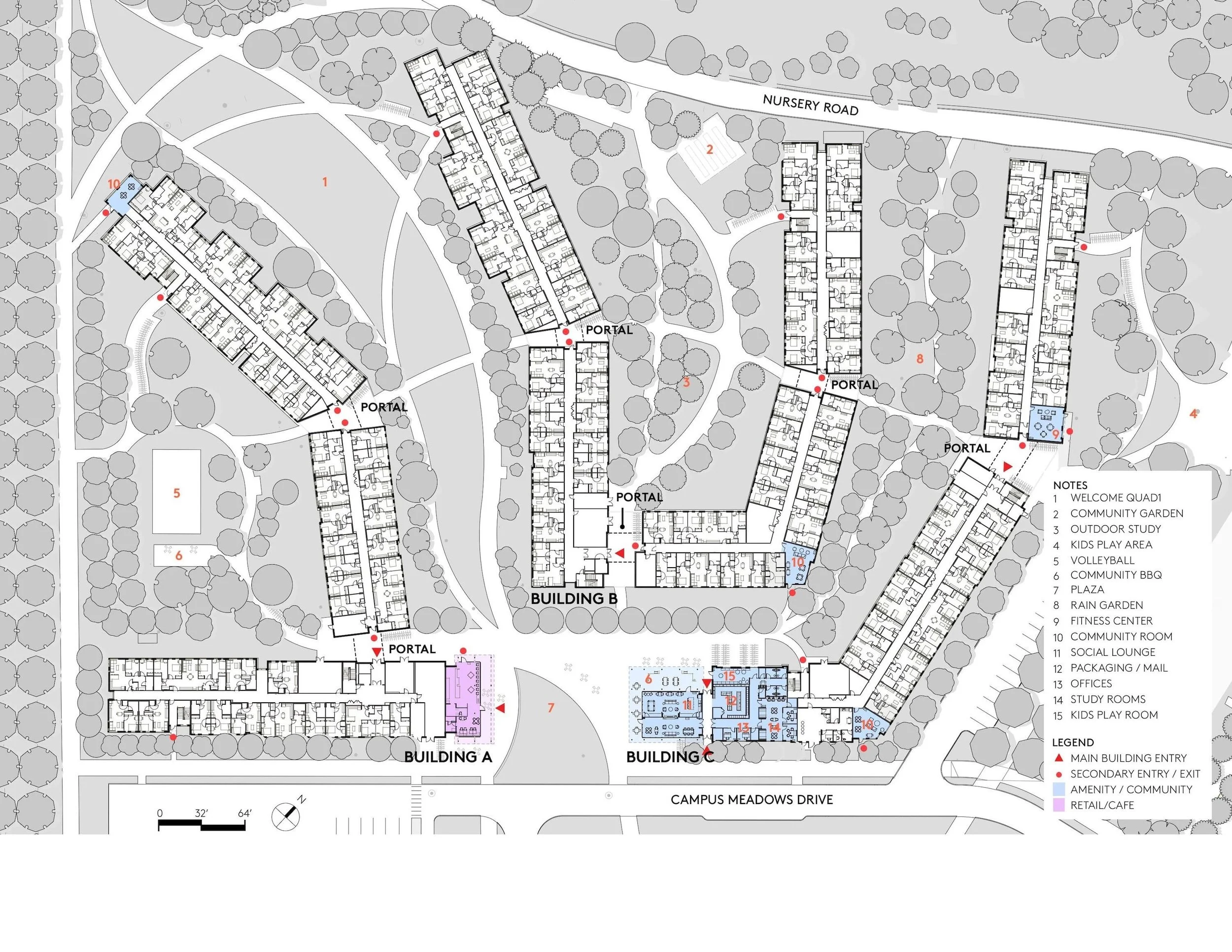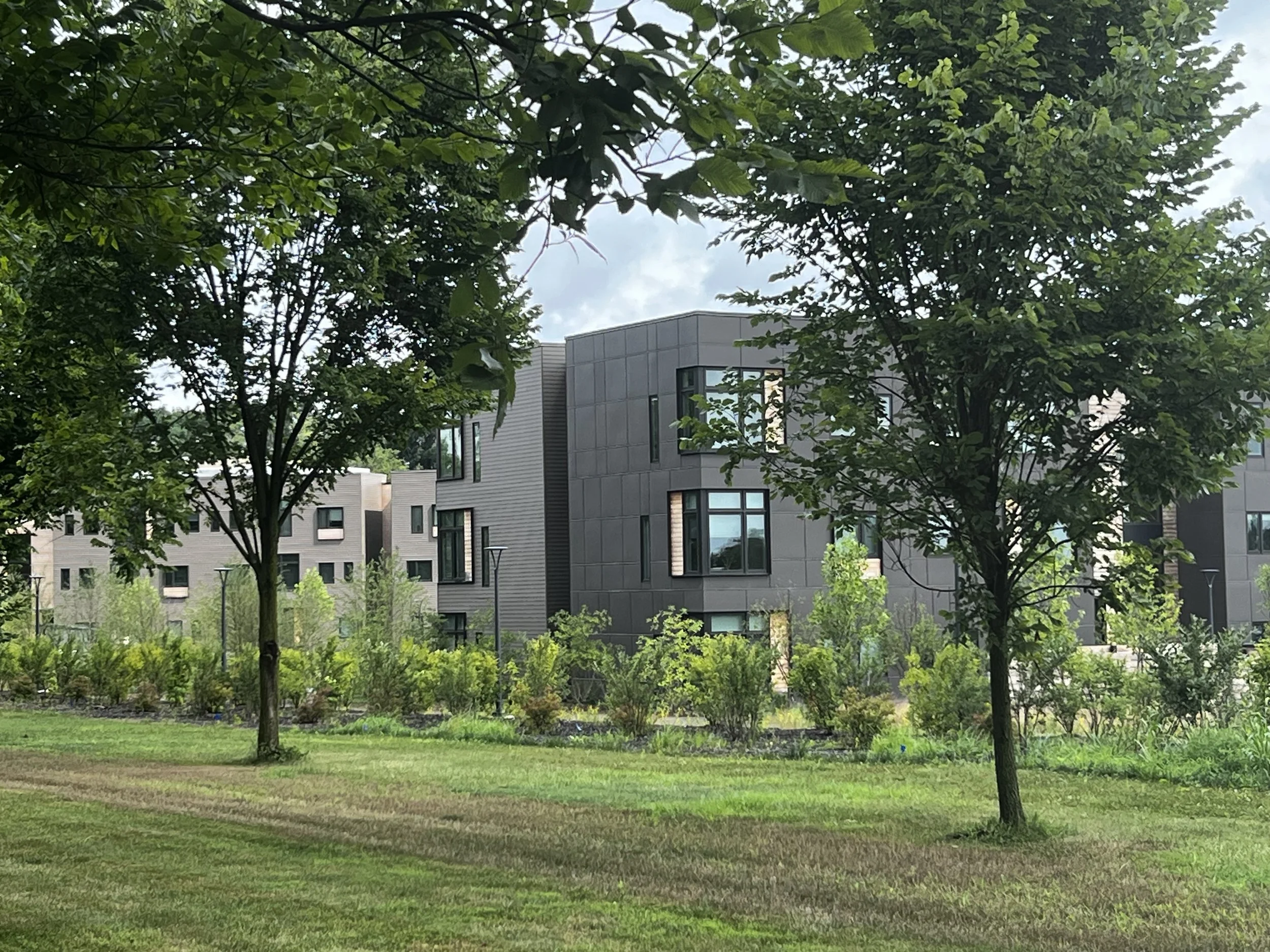
Meadows Apartments, Princeton University
Sustainability Consulting Role:
Michael Pulaski, PhD led the comprehensive sustainability strategy that included educating Princeton leadership and staff on Passive house standards and provided principal oversight of a detailed Passive House Feasibility study. Coordinated with university facilities management and design team to achieve dual certification for both Passive House and LEED standards. (Work performed while employed at Thornton Tomasetti)
Climate-Positive Solutions Delivered:
Incorporates rain gardens and green infrastructure to geothermal exchange wells, reduced greenhouse gas emissions,
Carbon sequestration and low-embodied-carbon materials.
Triple-pane glazing and airtight building envelope for maximum energy efficiency
Advanced heat recovery ventilation systems maintaining indoor air quality
Deep sunshading strategies optimized for building orientation
Performance Outcomes:
Phius+ Passive House Certification Achieved- one of the largest certified projects in the U.S.
LEED Silver certification (targeted)
90% energy reduction compared to conventional student housing
Exceptional indoor air quality through continuous fresh air ventilation
Enhanced student comfort with consistent temperatures year-round
Model for sustainable institutional housing demonstrating scalability of Passive House standards
Designed by Mithun, the project represents a groundbreaking achievement in sustainable student housing, serving as one of the largest Passive House certified residential projects in the United States while addressing the evolving needs of graduate students and doctoral candidates.